
Validating Your Startup? Don’t Fall for These Traps
I’ve pivoted more times than I can count. Here are the validation mistakes that hurt the most - and how to avoid them.

Remember 2021, when Clubhouse was everywhere? The buzzy social audio app exploded during the pandemic, acquiring millions of users, celebrity drop-ins, and generating investor interest. Around the same time, Koo, a Twitter alternative born in India, surged in popularity, encouraged in part by the political climate and regulatory crackdown on popular social media.


Both apps seemed like overnight successes, but as the hype faded and life returned to normal, so did the users. Both of these companies struggled to retain engagement — in other words, their early traction turned out to be false positives, driven more by context than by enduring product-market fit.
During my time on founding teams, I’ve made and watched these kinds of mistakes play out. Sometimes, it’d be because we tested hypotheticals instead of actual behavior. Or because we confused installs/early traction with lasting engagement. I hope, through this post to share a breakdown of some of these traps - and how to avoid them before they cost you your prime years (and a lot of money).
#1 Mistaking interest for intent
Without genuine user adoption and buy-in, even well-funded companies can struggle to achieve lasting success, if “interest” is mistaken for the intent to purchase/adopt.
An example of this was Workplace by Facebook, which initially gained strong traction by securing corporate buy-in, early pilots and signed contracts. However, this top-down validation didn’t account for the true end users actually adopting the product.

At one of my startups, we had several pilot customers in line to try the product. We started onboarding them onto pilots, but it seemed to take forever before we could get these pilots to convert into paid customers. That’s when we realized we’d missed an important piece of the puzzle: gaining end-user buy-in post-sale to retain the account.
Spot it early: Measure actual user engagement and retention during pilots - not just contract signings or “enthusiasm.” Are your end users actively using the product? Are they achieving what they need to without your product, even though they have your product?
#2 Overindexing on ‘feedback’
Our first instinct when we have an idea is to share it with a friend, confidante, or mentor. While these people want the best for you, there’s two things wrong with the approach:
They may not know best about the industry or problem statement
Even if they did, they may be hesitant to bring up flags that have less to do with the problem and more to do with other aspects (founder-market fit, GTM challenges, etc)
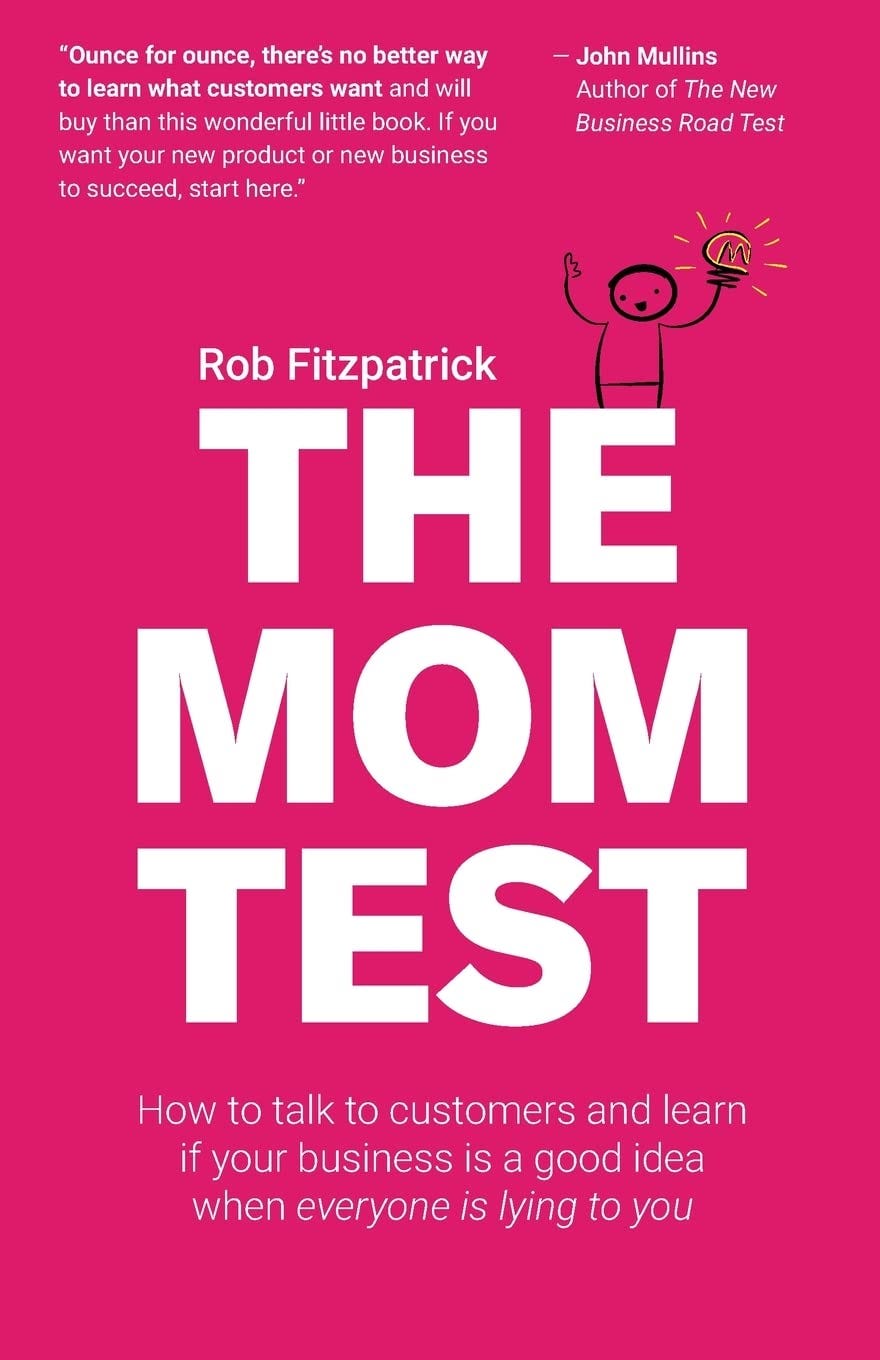
This is what “The Mom Test” by Rob Fitzpatrick talks about - you shouldn't ask your mom whether your business is a good idea - in fact, don’t ask anyone if your business is a good idea. Go straight to customers, and try making a sale instead.
Stop-Gaps:
Ask for behavior, not opinions:
✅ “have you paid to solve this problem before?”
❌ “Would you pay for this?”
Expand your feedback pool: Don’t rely solely on warm intros and people you know. While these can help make sales later on, reach out cold as if you were actually making a sale - sometimes, the lack of a response can surface key problems with your ability to reach the audience, or interest them at all.
#3 Testing hypotheticals instead of behavior
This mistake happens when you validate your behavior with future-oriented questions instead of observing what people actually do or have done. I see this happen very often in B2C contexts - let’s say you’re building an edtech app. You start talking to parents, the decision-makers who’d buy an edtech resource for their kids.
Parents run in fear of judgment - they worry that people might think they’re a bad parent just because they won’t spend money on an app for school. So when you ask them, “would you pay ‘$X’ for this?,” they say, “sure.”
When you dive into real behavior, though, you find out that the answer is more nuanced - not only is price segmentation important to help acquire different personas, but so is the aspiration you sell them, the format of the product, and so on.
Save yourself the misery: Instead of asking, give people an opportunity to SHOW you whether they would. These days, creating a prototype - a website to test if people proceed to buy or a playground environment to test the product - is much simpler than it used to be.
Run fake-door marketing tests (like making a website) and track how people click through it - don’t set up payments though 🤪
#4 Optimizing MVPs for the wrong outcomes
The builder’s bias often leads companies to develop products based on their own ideals and assumptions, which means you might end up launching a product optimizing for its impressiveness, rather than trying to use it to learn about your customers.
Some tech companies build out 4 SSO options to their product before validating whether customers will even use the core offering. This ends up testing design quality instead of product market fit. Do you know enough about your user and what makes products useful for them? How about their requirements and pain points?
So what really is MVP?
Tests the core hypothesis you’re after (1-3 key features you think are useful for your customer, no fluff)
Must make you slightly embarrassed about shipping this in public (lack of polish, minimal features)
Time-boxed build phase to keep you on track (what can we launch in 4 weeks?)
Finally, remember that your MVP is nothing if you can’t get it in front of some potential customers. Learn early - don’t try to complete a whole suite of features before you show it to potential users, because it’s better to fail early and pivot than spend all your time and money building something no one will use.
#5 Assuming “virality” or network effect without the right data
First-time founders are often excited about building the next Facebook or Instagram - a viral B2C idea that just “takes off,” but virality is one of the steepest hills to climb today. Every new app has to compete not just with others in the same category, but also with attention titans like Meta, TikTok and X. Even if you somehow manage to get through this hill, the moment is short-lived and you’re then on a hamster-wheel constantly fighting to retain engagement, as well as figure out how to monetize it. This often requires raising funding so you can spend those marketing dollars.
This trap tends to catch newer founders more than seasoned ones. It’s easy to then dive in without validating whether people will stick around and/or pay for this.
Stop-gap? Test retention before you expand reach.
Gaining more users means nothing if they don’t continue using the product organically. Do they become less active over time? Do they uninstall your app?
Do they already share about your app without being asked? (The invite button only works if the behavior already exists)
Do you need to keep marketing or calling in order to get a small group of people to be more active users?
I walked through these five traps - some silent and sneaky, some loud and glaring - that can derail early teams before they even realize it, because I’ve seen this happen firsthand, both during my time at startups, and during my conversations with founders as a VC intern.
You notice something in common between these 5 traps, though? They all make it incredibly easy to believe that you’re actually validating, when in reality, you’re gathering signals that largely feel good.
There is NO perfect playbook for early-stage validation, and this problem has become especially bigger in the face of new tech - will something else wipe AI out from the face of the earth? We don’t know, do we? But there are questions worth sitting with:
Are you studying behavior or collecting opinions and hypotheticals?
Are your users cold, or conveniently close?
Are you learning about your users through this product, or just building what feels exciting?
Are people returning, or arriving once?
When you find yourself moving on the idea, it’s worth pausing to ask: Am I learning something, or am I just getting better at telling the story?